



A health flexible spending account, or FSA, is a workplace benefit that lets employees use pretax pay for eligible medical bills. For 2027, the IRS has raised the limit on employee contributions. Employers can also put money into these accounts, but they do not have to.
The health FSA adjustment is among almost 70 tax provisions covered by the IRS's annual inflation announcement. The contribution ceiling determines how much employees can set aside through payroll; it does not guarantee that unused money will remain available indefinitely.
Health FSAs generally require employees to use their funds by the plan's deadline. Employers can offer limited relief from that rule, so an account's deadlines and treatment of leftover money depend partly on the employer's plan.
What is the 2027 limit?
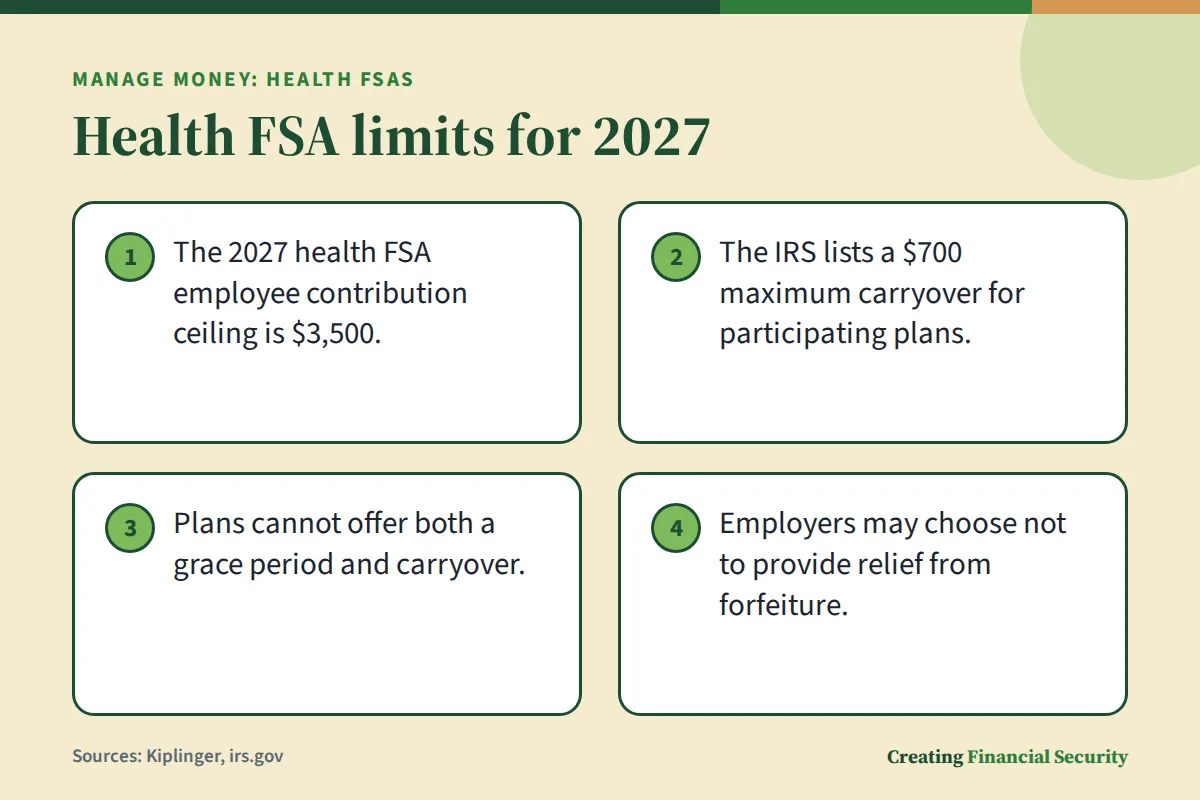
Employees can elect payroll contributions of up to $3,500 to a health FSA for tax years beginning in 2027. The IRS announced a $100 increase over the previous limit, which was $3,400.
The IRS says the tax changes announced for 2027 generally concern returns filed in 2028. For the health FSA contribution ceiling specifically, the agency uses the wording “tax years beginning in 2027.” That wording should not be confused with a statement about every employer's plan year.
The cap is about what an employee puts in through payroll. An employer may choose to add money to an account too, but isn't required to.
How a health FSA works
Employees fund a health FSA through deductions from their pay before taxes are taken out. Eligible uses include insurance deductibles and certain other medical bills. Some expenses can qualify even when insurance does not pay for them.
These contributions generally avoid federal income, Social Security and Medicare taxes. That tax treatment applies to money employees contribute for eligible expenses; the account still has contribution limits and spending deadlines.
Eligible bills can include care for an employee's dependents or spouse, as well as the employee. Possible qualifying purchases include hearing aids, prescription glasses, contact lenses and prescription medicines. Most nonprescription medicines may also qualify, along with certain dental treatments and orthodontic expenses. Eligibility matters: the account is for qualifying costs, not every purchase related to health.
With a health FSA, employees generally have access to their entire annual election when the plan year begins, rather than waiting for all payroll deductions to occur. Dependent care FSAs do not work that way.
The "use it or lose it" rule
Unused money generally does not remain the employee's to spend indefinitely. When the health plan's year ends, the employer generally keeps any remaining balance, unless the plan provides one of the permitted exceptions.

There are two possible exceptions. An employer can allow an additional 2.5 months for spending the balance; for 2027 funds, the typical grace-period deadline is March 15, 2028. The other possibility is a carryover, which preserves a limited balance for use in the following year.
The employer can choose either form of relief, not a combination of the two. It can also choose to provide no relief at all.
How the carryover amount works
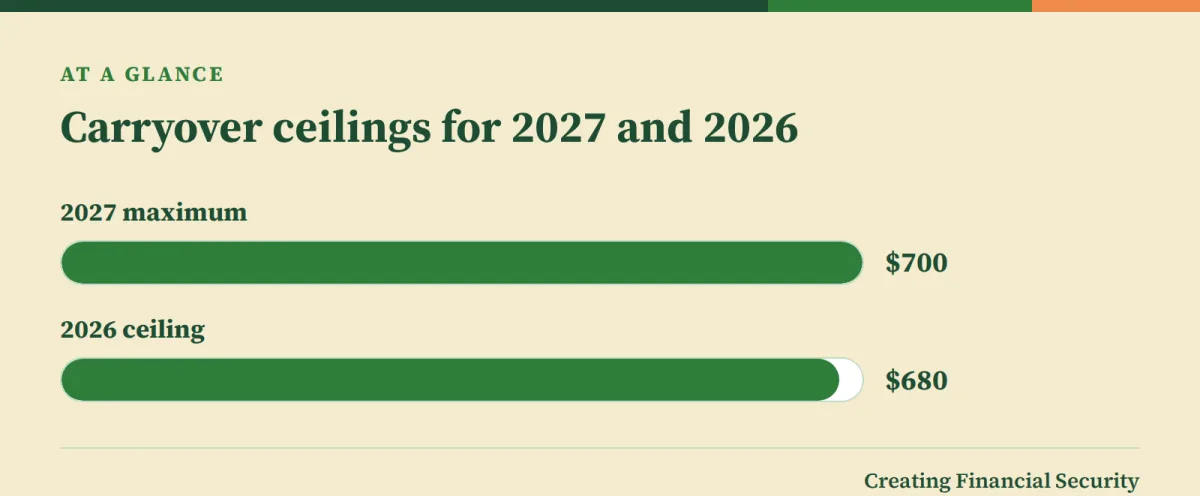
The IRS lists a $700 maximum carryover in its 2027 announcement, but only for plans allowing a balance to be carried forward. The agency describes this as a $20 increase from tax years beginning in 2026. The previous carryover ceiling was $680.
The federal carryover ceiling does not mean every employee receives a carryover. An employer must include that feature in its plan. The plan's own terms determine whether employees have this option rather than a grace period or neither form of relief.
Other details that can matter
Leaving a job generally means losing access to the unspent balance: the employer keeps it. An exception applies when the departing employee qualifies for COBRA and elects that coverage. Under IRS rules, ownership of the account rests with the employer, not the employee.
Amounts contributed beyond the permitted ceiling are treated as taxable wages, using the employee's applicable income tax rate. Employer payroll systems typically limit deductions to prevent excess contributions. That safeguard does not change the tax treatment if an excess contribution occurs.
A dependent care FSA is a separate account with its own limit. The $3,500 figure applies only to health FSAs.
Self-employment alone does not provide a way to establish an FSA. A self-employed person may be able to participate through an employed spouse's workplace, and other health benefits with tax advantages may be available.
The bottom line
The 2027 health FSA limit is $3,500, up $100 from the year before. The use-it-or-lose-it rule still applies, and any grace period or carryover of up to $700 depends on what your employer's plan offers.
During open enrollment, the plan's spending deadline and any exception for unused money are important details to understand alongside the contribution ceiling. The IRS's 2027 inflation adjustment announcement gives the federal figures and identifies Revenue Procedure 2026-35 for further details. Plan terms determine whether the employer offers relief from forfeiture. A qualified tax professional or your benefits office can help with questions about your own situation.
Questions readers ask
Are health and dependent care FSAs the same account?
What happens to unspent FSA money?
What happens to my FSA if I leave my job?
Sources