



A payment date that looks wrong can be unsettling to find on a credit report. A dispute gives you a way to ask for an investigation when information seems inaccurate.
What a credit report error can look like
Errors can be as simple as the wrong name or address listed on an account, or a payment date that's off. They can affect a credit score and the chance to get a loan or rent a home.
Extension educators at the University of Wisconsin note that inaccurate information can affect access to affordable loans, insurance, housing or work. Sometimes it can also be a sign of identity theft.
How it works, step by step
- Open a dispute with the bureau that shows the error, online or by mail or phone.
- Describe the issue thoroughly and supply supporting records.
- Contact the company associated with the incorrect information.
- Save your correspondence and attachments, and record each contact.
- If the report does not change, you can request a dispute statement in future reports.

Why the checking falls to you
Spotting and disputing errors is up to you. The bureaus maintain tens of millions of reports and cannot check every entry.
That isn't a reason to feel behind. It just means a careful read of your own report is a sensible first step.
Two places to send a dispute
The extension educators suggest contacting both the bureau that provided the report and the source of the error. They are two separate steps.
First, the bureau. The central website for ordering credit reports does not handle disputes. They go to the reporting bureau: Equifax, Experian or TransUnion. Each bureau has an online system, and mail and telephone are also options. The report should explain how to start and include a mailing address and phone number.
Second, the company responsible for the information. If the mistake involves a credit card, for instance, that card company is the one to contact. The report should include an address for each creditor.
What to put in the dispute
Explain the problem in detail, and include your supporting documents with the dispute letter.
The Office of the Comptroller of the Currency (OCC) calls a written notice to the company that supplied the information a direct dispute. That company is known as the furnisher. A direct dispute is separate from the dispute you send the bureau, and the extension guidance describes doing both.
The OCC says to give the furnisher enough detail to locate the disputed account, such as its account number. Include your name and contact details: an address and a phone number. Pinpoint the account information you believe is incorrect and explain the mistake. Send all supporting records and any other information the company reasonably needs to check the dispute.
The furnisher should give a mailing address on the report or in a separate notice. If it does not, the OCC says the notice may go to any of its business addresses.
Keeping a paper trail
Keep your letters, emails and attachments, plus a log of every contact with the bureau and creditors.
Some people prefer mail because it can make recordkeeping easier; certified mail with a return receipt is one example. Which route fits is a personal choice.
What happens after you file
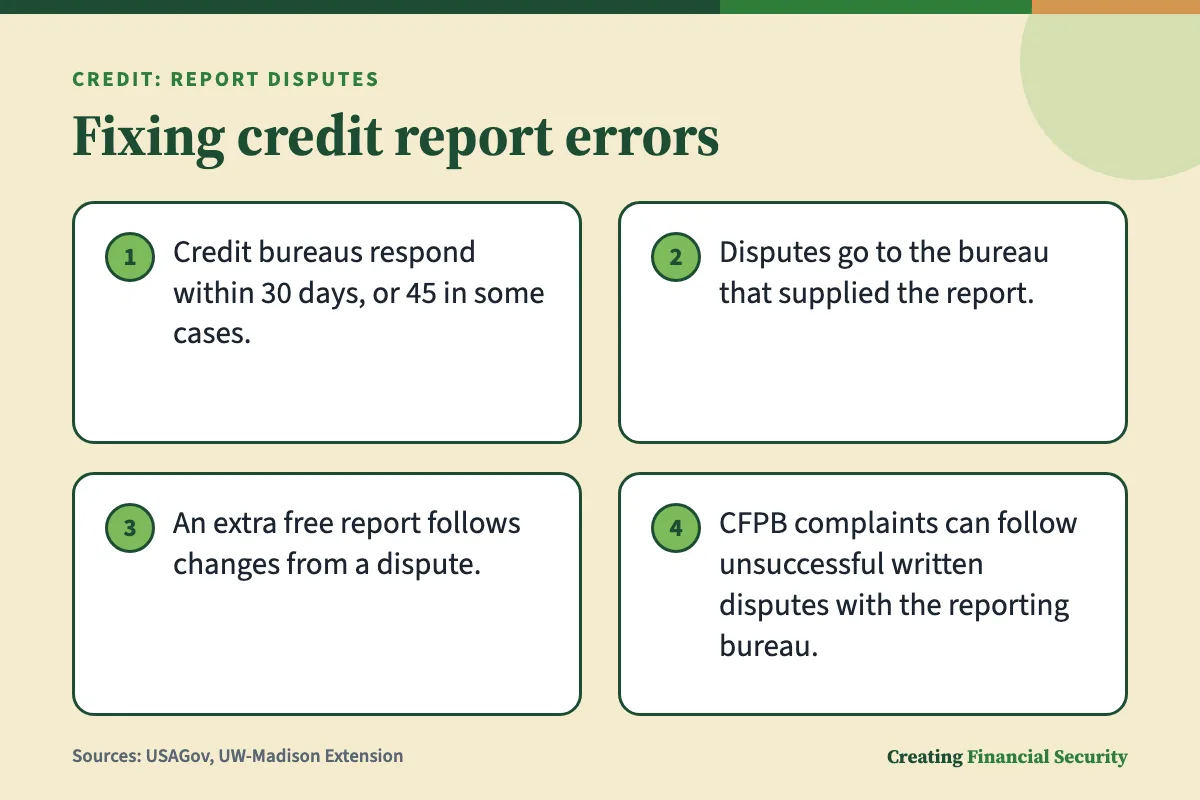
After receiving a dispute, the bureau investigates and responds within 30 days, or within 45 days in some cases.
The bureau must provide written results. If the report changes, it must also provide another free report that does not count against your free annual reports. The other two bureaus will be notified of corrections.
You can ask the bureau to notify recipients of your report about corrections. That request can cover recipients during the preceding six months, or the preceding two years when the report was provided for employment purposes.
If the report doesn't change
If the report does not change, you may request a statement of dispute in future reports. You may also ask the bureau to provide that statement to recent recipients, although it may charge for doing so.
If a written dispute with the reporting bureau does not correct the error, a complaint to the Consumer Financial Protection Bureau (CFPB) is an option. The CFPB also offers instructions for reporting credit report errors.
The bottom line
You can dispute a credit report error yourself by explaining what is wrong and providing records that support your dispute. Contact the bureau that shows the error and the company that supplied the information. Explain the problem clearly, include your documents, and keep copies of everything plus a log of your contacts.
The bureau must provide the investigation results in writing. If a written dispute with the reporting bureau doesn't fix the error, a CFPB complaint is another option. The CFPB provides detailed instructions for reporting errors. If an error might be a sign of identity theft, it helps to learn how credit freezes and fraud alerts work.
Questions readers ask
Can I dispute errors through the central credit-report ordering website?
What is a direct dispute?
What if the investigation changes nothing?
Sources